Gender, precarity, and formal systems
Tracing how laws, budgets, institutions, and programs fail women, minorities and the marginalized, across care, WASH, urban development, and other social welfare systems.
Law x labour x gender x social welfare x technology
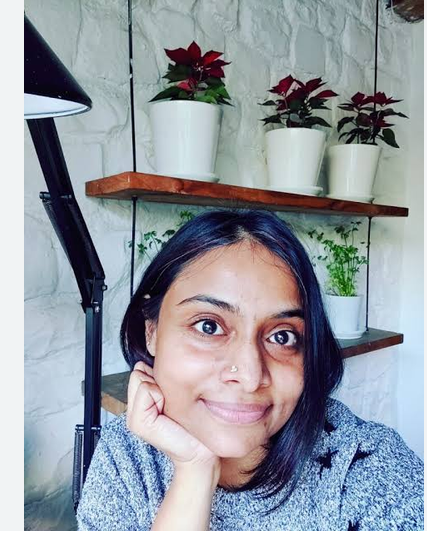
Human rights lawyer, policy researcher, poet, writer, and interdisciplinary strategist working across civil society engagement, gender, labour, technology, governance, and rights-based policy.
Translating legal, technical, and institutional complexity into policy guidance that decision-makers can use.
With 14 years of experience across human rights law, civil society engagement, policy research, writing, and governance strategy, Renjini works where formal systems meet the women, workers, and communities they often overlook.
Current Lens
Renjini's work turns dense legal, regulatory, and technical material into usable guidance for people who have to legislate, govern, fund, or implement. Whether it be budgets, encryption policy, urban governance, WASH, labour codes, or gig worker legislation, the common function is making complexity actionable.
Gender is the constant lens, but the site of inquiry shifts to wherever precarity concentrates: unpaid and care work, WASH workers, informal and platform workers, urban employment, digital rights, and AI's differential impact on women and other marginalised and vulnerable communities in the Global South.
Her work sits inside institutional machinery, not only beside it. It has contributed to laws, model contracts, policy inputs, implementation guidance, and adopted strategy across government, civil society, and public-interest institutions.
Work Experience
Led research and operations at the Centre for Gender Analysis, examining how governance instruments shape women's economic outcomes across labour, platform work, and social protection. Contributed policy inputs on gig and platform worker welfare legislation for states including Karnataka and Kerala. Supported JJN's digital and AI governance vertical with research and through coordination of high-level convenings on AI, labour markets, and social protection in the Global South.
Led research on gender and Diversity, Equity & Inclusion (DEI) in India's corporate sector, with a focus on how digital tools, online hiring technologies, and platforms affect women's employment across hiring, retention, advancement, and re-entry. Researched India's upcoming Labour Codes with a focus on women, gig, platform, and informal workers, and authored policy work for Rajasthan on integrating a gender lens into the state's urban employment guarantee scheme.
Provided legal, policy, and implementation advisory for urban development, WASH, and gender across APAC region for private-sector partners and government clients including NITI Aayog, and state governments. Drafted gender-inclusive model contracts, and reviewed policy and legislative instruments for key public programs.
Led research and advisory projects on gender equity, technology policy, data privacy, encryption, social inclusion, and women's economic empowerment for UN agencies, philanthropies, governments, and industry bodies.
Delivered legislative research and policy support to elected representatives across both Houses of India's Parliament, drafting private member bills, parliamentary briefs, and background dossiers under tight deadlines.
Supported legislative and policy research for the office of Rajya Sabha Member of Parliament Kanimozhi Karunanidhi through the LAMP Fellowship at PRS Legislative Research.
Areas of Focus
Tracing how laws, budgets, institutions, and programs fail women, minorities and the marginalized, across care, WASH, urban development, and other social welfare systems.
Examining how labour codes, social protection, worker classification, and recognition shape dignity and security for women, informal, care, WASH, gig, and platform workers.
Tracking how encryption, surveillance, digital rights, algorithmic control, and platform work are reshaping technology governance and resurfacing in debates around AI.
Turning technical and legal complexity into clear recommendations, public writing, legislative inputs, and implementation guidance.
Selected Writings and Publications
A 2026 report examining rural women's migration, labour force participation, and the social and structural conditions that shape access to work.
JustJobs Network · 2025 From Precarious Work to Perennial Rights?Analysis of the Supreme Court's Dharam Singh decision and its implications for daily wage, government, Anganwadi, and gig workers facing long-term precarity.
CGAP South Asia · 2025 30 Years After Beijing: Mapping the Progress of Women in Political Leadership Across South AsiaA co-authored and peer-reviewed 2025 regional report on comparative legal and policy frameworks, intersectional barriers, and strategies for women's political representation.
Routledge India · 2021 The Long Walk Towards UncertaintyA 2021 contribution in Migration, Workers, and Fundamental Freedoms, engaging with labour mobility, rights, and worker precarity.
RGNIYD & UNICEF India · 2020 Adolescents in Tamil Nadu: Policy PerspectivesA 2020 policy publication developed with Rajiv Gandhi National Institute of Youth Development (RGNIYD) and UNICEF India on adolescent development and youth policy.
The Quantum Hub / NASSCOM · 2020 Framework for Regulating Encryption in IndiaA 2020 policy framework developed with NASSCOM India on encryption, surveillance, national security, and digital freedoms in India's technology governance landscape.
The Quantum Hub · 2020 Women's Economic Empowerment in India: A Policy Landscape StudyA policy landscape study mapping India's women's economic empowerment ecosystem and the policy conditions that shape access to work, care, and opportunity.
An op-ed on ASHAs, Anganwadi workers and helpers, Mid-Day Meal workers, and the contradiction of expanding the care economy while overlooking the women workers who sustain it.
The Hindu · 2025 · Article Drop the Piecemeal Ways to Social Security for WorkersA 2025 op-ed on the need for more coherent and effective social security for workers, especially in contexts of informal and platform-mediated work.
GenderCheck · 2025 · Interview Beyond Bus Fare Subsidy Schemes: Tracing Urban Women's Access to Gender-Responsive MobilityA 2025 piece on fare subsidies, public transport infrastructure, safety, and the conditions needed for gender-responsive urban mobility.
Firstpost · 2019 · Article India's Traceability QuestionA 2019 analysis of traceability, privacy, platform regulation, and the legal tensions embedded in digital governance debates.
OpenDemocracy · 2015 · Article The need to decriminalise attempted suicide in IndiaA public-interest piece on mental health, criminal law, and the need to remove punitive responses to attempted suicide in India.
A creative-critical piece using Indian legal text as scaffolding for poems on shame, law, policy, privacy, citizenship, and trans rights.
Substack · 2026 Inner WeatherA newsletter space for essays, poems, fragments, and reflections on interior life, language, and the world just outside it.
The Alipore Post · 2022 WinterA poem published by The Alipore Post.
LiveWire · 2021 An Unwelcome GuestA poem published by LiveWire.
LiveWire · 2021 They Said It Didn't HappenA poem published by LiveWire.
BrownGirl Magazine · 2020 It's not Just Foundation, it's my IdentityA personal essay on beauty, identity, colourism, and the politics of appearance.
Education and Qualifications
London School of Economics (LSE), UK
National University of Advanced Legal Studies (NUALS), Kerala, India
14
years across law, policy research, civic engagement, and governanceSouth Asia
rights-based policy work with civil society, governments, and multilateral institutions2.3k+
LinkedIn followers engaging with policy and writingAdvisory and Civic Engagement
Supports institutional accountability and grievance oversight as an external member of the Prevention of Sexual Harassment Committee at Centre for Public Policy Research, Cochin.
Twice nominated to resolve electoral grievances and advise on process integrity, democratic participation, and institutional accountability.
Reviews youth-led policy advocacy briefs submitted to Indian parliamentarians on gender, technology, women's political representation, budgeting, social protection, and electoral reform.
Contributes to adolescent development and youth policy work, including UNICEF-linked projects requiring technical and policy review.
Supports CGAP-South Asia's ongoing work on gender, governance, and democratic participation through research inputs, peer review, and contributions to public-facing knowledge initiatives, including the podcast series Worth Asking.
Engages with networks focused on women's participation, inclusion, and leadership in technology spaces.
Contact